
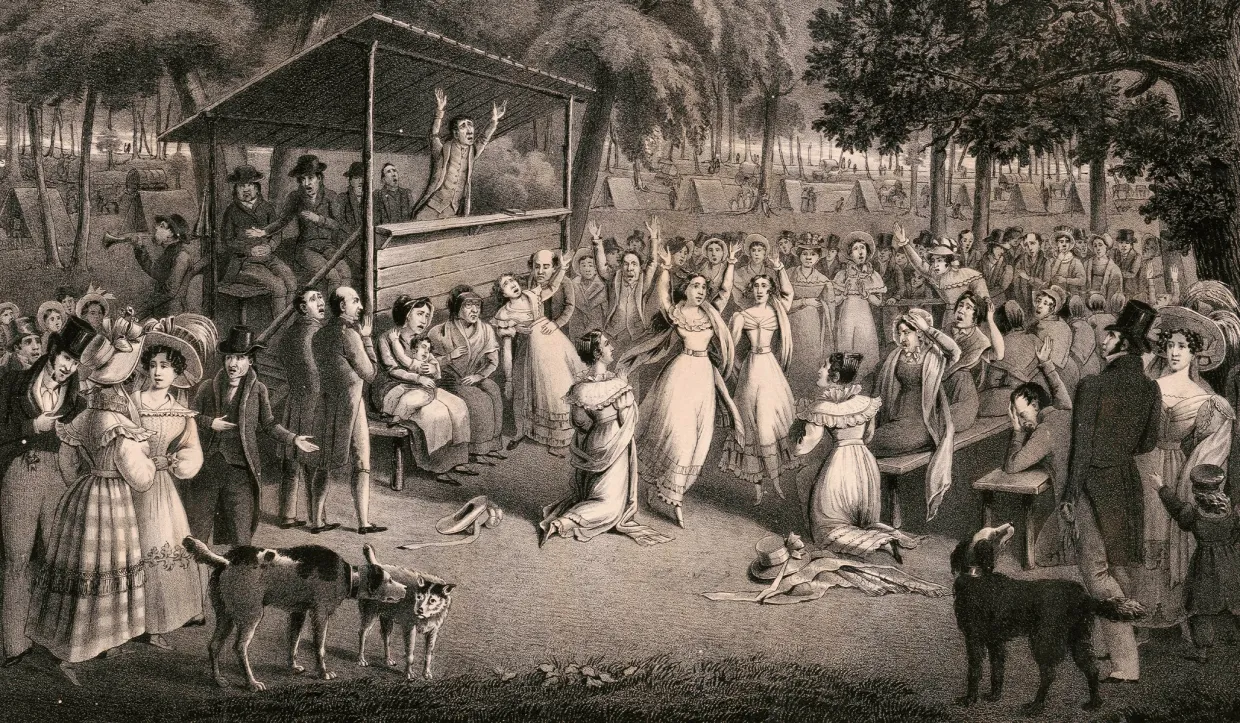
Last September, as a manhunt was underway for Charlie Kirk’s murderer, my colleague Mary Eberstadt and I drove from central New York to John Brown’s farm in the Adirondacks, one of several upstate stops in what is known as the “Burned-Over District,” as revivalist preacher Charles Finney famously called it. Finney was referring both to the scorched spiritual landscape left in the aftermath of the Second Great Awakening and to the numerous movements, ideologies, occultists, sects, and personalities that came from the region.
It was there, in the first frontier of the young republic, that Protestant institutions dissolved into individualism, and Calvinism into progressive ideology, and that America forged a distinctive political theology that many have come to regard as less Christian than Gnostic. Though not an organized, credal religion, Gnosticism generally contends that the world is irredeemably fallen and that matter, including the human body, is evil; that the little good there is survives like trapped light, a symbol for knowledge; and that this secret knowledge is available only to the elect. The Puritan-like gospel of modern progressive movements, stripped of Christianity but retaining moral intensity, with ever-evolving yet sacred dogmas and righteous wrath, had its origin in that frontier...

